





Creativity is Social
Maximizing efficiencies is not enough for continued growth. Businesses must get creative.
Before we dive in, it’s important to understand the difference between creativity and innovation, as the terms are often used interchangeably.
Creativity is the generation of novel and useful ideas, often by connecting knowledge in new ways. Innovation is the realization of those ideas (as products, services, practices, etc.) and their implementation to create value.
With the accelerated lifecycles of products and services, companies have to think about problems and business issues in new ways. Maximizing efficiencies is no longer enough for continued growth. Businesses must get creative.
Discover the drivers behind high-performing teams and what sets them apart. Learn how to cultivate a culture that enhances creativity and increases the chances of creative ideas becoming innovations. Gain insights into the specific roles individuals, teams, and leaders play in fostering both high performance and creativity.
Based on Dale Carnegie's research, including input from 2,650 global respondents and experts on high-performing teams. Also draws on a Dale Carnegie Training survey of over 5,000 employees across sixteen countries on creativity in the workplace, alongside secondary research. Insights are drawn from Dale Carnegie's white papers and the expertise of Dale Carnegie's research leadership (name author and any supporting experts).
- Discover the top 15 skill sets that are in demand in 2025
- Learn how to enhance your creative abilities individually and as a team
- Explore how following the journey from creativity to innovation leads to better and more tangible results.
- From individual idea generation
- To network-wide idea elaboration
- Idea championing in an organization
- And finally idea implementation
- Explore the seven essential factors organizations must address to raise teams to the next level.
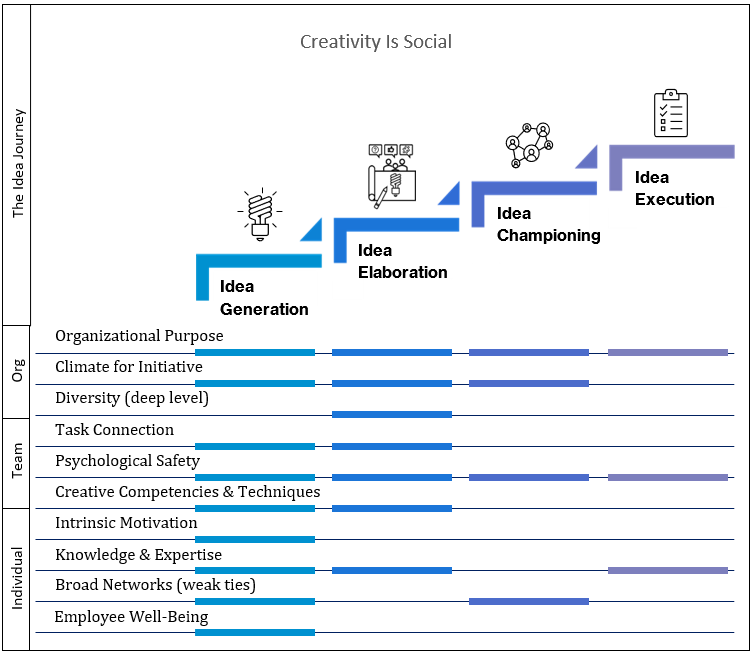
All of the drivers are arguably important across all phases, however, those indicated are phases in which each is especially relevant.
For details on how to cultivate a culture for high-performing teams, including exact recommendations for what leaders can do and what these changes in workplace culture would look like, download the full white paper below.
 (Small).png)
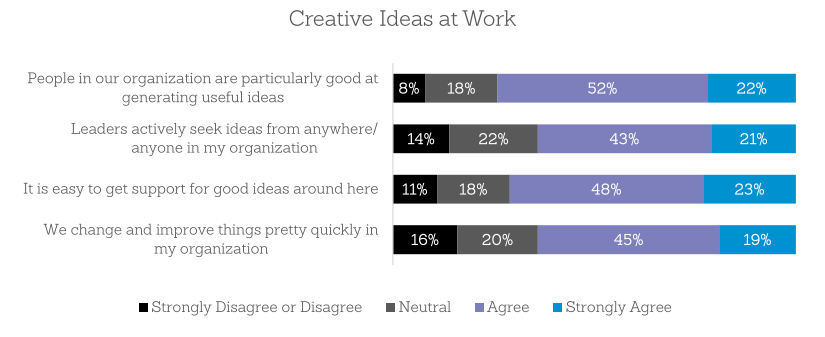
Unlike film studios, many organizations are not in the habit of seeking out and developing creative new ideas. While nearly three-quarters of the respondents in our study agreed that their colleagues are good at generating useful ideas, far fewer agreed that leaders actively seek ideas from anywhere and anyone in the organization.
Many good ideas seem destined for nowhere, with nearly 3 in 10 respondents unable to agree that it is easy to get support for them… Most respondents feel their organizations could do more to make the journey for creative ideas easier.
- Foster adaptability by promoting lifelong learning and empowering team members.
- Improve collaboration and cross-functionality by fostering constructive feedback and mutual recognition.
- Protect people’s intrinsic motivation: Keep them engaged. This is an ongoing challenge for leaders.
- As team leaders, learn how to promote emotional connection to work and build psychological safety.
- As senior leaders, effectively communicate organizational purpose, encourage a climate of risk-taking, and foster meaningful diversity.
Download the white paper today and take the first step toward unlocking high performance and innovation in your organization.