






A Leadership Imperative: Creating a Culture of High-Performing Teams
Unlock the Potential of Your Teams with Alignment, Trust, and Engagement
Discover how top-performing teams really work
Organizations today face rapid change from hybrid work models, technology, and evolving workforce expectations. While most teams (96%) meet their performance goals, less than one-third (30%) exceed them. This white paper explores why high-performing teams are rare, what sets them apart, and actionable steps to foster a culture of excellence.
Drawing on research with 2,650 global respondents, the paper shows how leaders can close perception gaps, empower employees through accountability, and leverage communication and training strategies to strengthen collaboration, adaptability, and overall team satisfaction.
 (Small).png)
Bridging the Perception Gap: Aligning Leadership and Teams
High-performing teams are built on shared understanding. Leaders often see team culture more positively than members do, creating gaps that hinder performance.
- Leaders rating culture as strong: Accountability 73%, Teamwork 84%
- Team members rating culture as strong: Accountability 48%, Teamwork 60%
Closing these gaps requires understanding employee perspectives, creating clear expectations, and establishing trust across all levels.

Leaders and teams often see things differently
High-performing teams thrive when employees have access to skill development and training opportunities. Adaptability is critical in a dynamic workplace.
- Teams exceeding goals reporting access to development: 74%
- Teams meeting or failing goals reporting access: 49%
Leaders must embed ongoing learning into culture and empower employees with autonomy, problem-solving, and decision-making authority to drive performance.
 (1).png)
Skills and confidence drive results
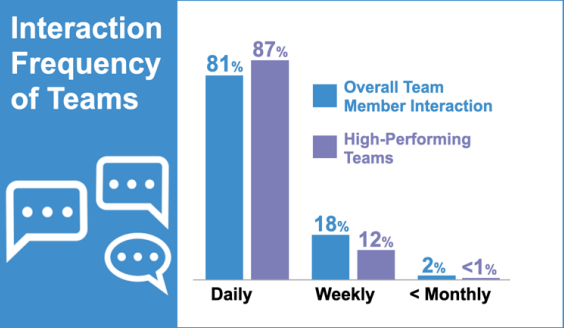
Effective communication and collaboration remain the key drivers of high performance. Teams that communicate clearly and work cross-functionally outperform those that do not.
- Daily interaction with team members: 81% of individual contributors
- High-performing teams embrace collaborative tools such as Slack, Zoom, and shared platforms
Leaders need to tailor communication methods, encourage two-way dialogue, and integrate technology to support—not replace—the culture of teamwork.


Written by:
Robert Coleman, Ph.D.
Director of Research and Thought Leadership
Robert is responsible for ongoing research into current issues facing leaders, employees, and organizations worldwide. With over 25 years of experience, Robert brings a research-driven approach to help organizations and practitioners identify and address significant areas of impact for workplace improvement.


