








The Power of Empathy: A Key Soft Skill for the Future of Work
Empathy is not just a soft skill. It is a critical strategic capability for leaders.
Empathy: A Vital Component of Emotional Intelligence
This white paper explores the strategic role of empathy and examines:
- Its function as a core element of emotional intelligence
- The balance between empathy and accountability
- The impact of a leader’s empathy on organizational culture
- How empathy is expressed and strengthened through communication
- Its impact on employee retention, engagement, and team effectiveness
- Generational and gender-based perspectives on organizational empathy
- Common barriers to practicing empathy in the workplace
.png)
What Is Empathy?
Empathy is not simply a “nice-to-have.” It is essential in today’s modern workplace. Empathy is not just a “soft skill.” It is a strategic leadership capability that strengthens resilience, builds trust, and drives long-term performance.
At its core, empathy is “the energy of understanding, awareness, sensitivity, and the lived experience of another person’s emotions, thoughts, and experiences.” Empathy is the ability to recognize and respond to what others are feeling, an indispensable tool for leaders who manage diverse teams and complex dynamics.
 (1).png)
Empathy as a Strategic Retention Tool
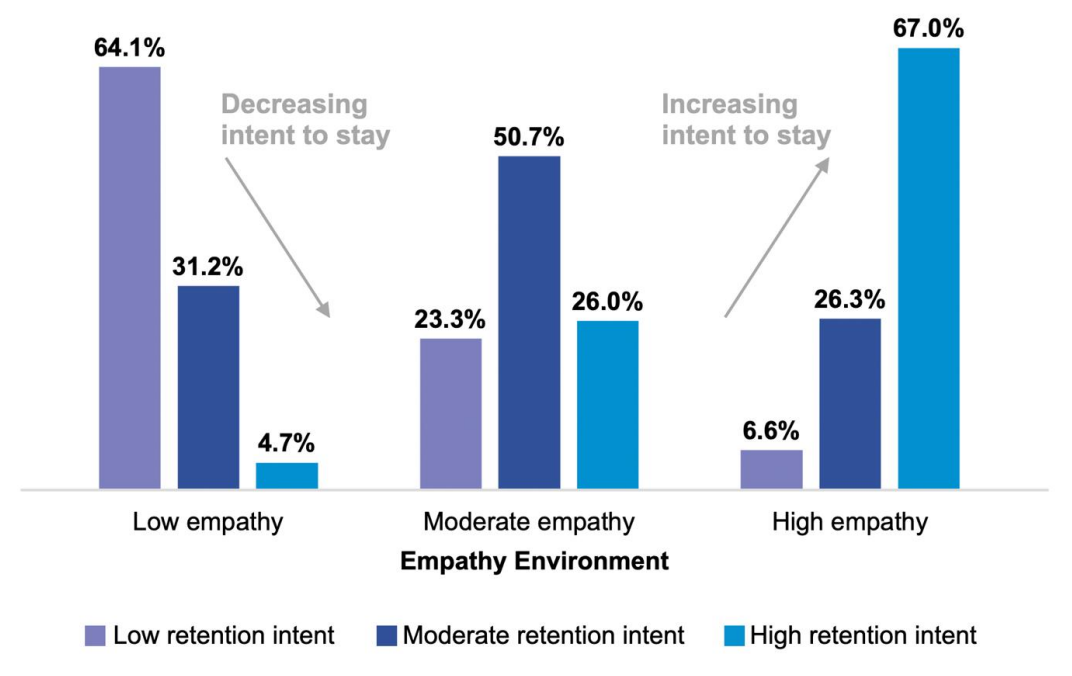
The data is compelling. In workplaces with high levels of empathy, 67% of employees report a strong intention to stay, compared to just 5% in low-empathy environments. Empathy also strengthens job satisfaction and team performance. Simply put, employees who feel heard, valued, and supported are not only more loyal. They are more motivated, collaborative, and successful.
Employees in high-empathy environments are far more likely to express a strong intention to remain with their organization.
The Power of Empathy at Work
Research from Dale Carnegie reveals a clear gap in how employees experience empathy from their leaders. While empathy is proven to strengthen retention, job satisfaction, and performance, only 27% of employees strongly agree that their leader cares about them as individuals, and only 21% believe their leader cares about how life outside of work affects their role. These gaps are not abstract. They represent measurable risks to engagement and retention.
Our global study highlights this leadership empathy gap:
- Only 27% of employees strongly agree that their direct leader cares about them as individuals.
- Only 21% strongly agree that their leader cares about how life outside of work affects their role.



Written by:
Robert Coleman, Ph.D.
Director of Research and Thought Leadership
Robert Coleman is responsible for leading ongoing research into the critical issues facing leaders, employees, and organizations worldwide. With more than 25 years of experience, he brings a research-based approach to helping organizations and professionals identify and address key leverage points for improving the workplace.


